




10 Best Food Packaging Solutions for Global Buyers?
Global food buyers rarely choose packaging by appearance alone. They examine shelf life, temperature exposure, transport distance, labeling needs, and disposal options. A pouch that performs well in a dry warehouse may fail beside an icy container wall. Small design decisions matter.
Dr. Gordon L. Robertson, a respected food-packaging researcher, stated, “The primary purpose of food packaging is to protect food from the environment.” This principle remains practical today. Effective food in packaging must control moisture, oxygen, light, contamination, and physical damage. It must also support efficient filling, stacking, handling, and retail presentation. For international shipments, barrier performance becomes especially important. A coffee bag may need strong oxygen protection, while fresh produce may require controlled ventilation. One format cannot solve every problem.
This guide reviews ten food packaging solutions for global buyers, from flexible films and retort pouches to recyclable cartons and modified-atmosphere trays. Each option has strengths, limits, and trade-offs. Cost is not the only concern. A cheaper package may create higher product loss, difficult recycling, or unstable performance during humid transport. No solution is perfect. That assumption deserves reconsideration. Buyers should test packaging with real products, realistic shipping routes, and measured storage conditions. Supplier certificates help, but they do not replace verification. The best choice balances protection, compliance, production efficiency, consumer convenience, and environmental responsibility. Sometimes, the most attractive package is not the most reliable one.
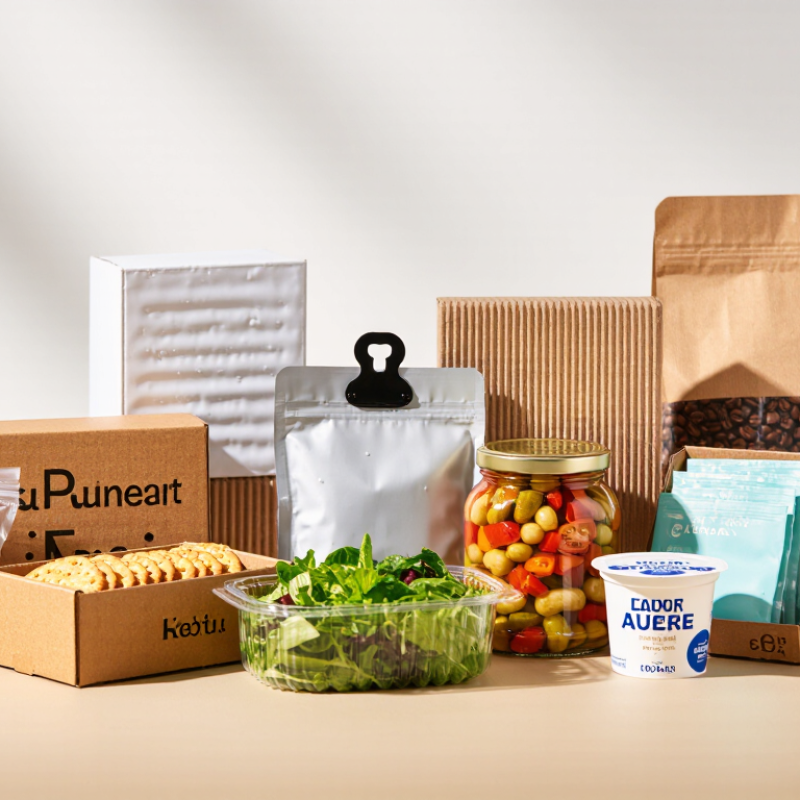
Food Packaging Scope: 13.2% of Food Is Lost in Supply Chains (FAO)
10 Best Food Packaging Solutions for Global Buyers?
Food Packaging Scope: 13.2% of Food Is Lost in Supply Chains (FAO)
According to the FAO, 13.2% of food is lost between harvest and retail. Packaging cannot solve every loss, but it can reduce bruising, moisture damage, oxygen exposure, and temperature stress. Global buyers should compare ten practical options: corrugated cartons, molded fiber trays, vacuum packs, modified-atmosphere packs, retort pouches, aseptic cartons, insulated boxes, reusable crates, moisture absorbers, and time-temperature indicators. Each solution needs testing against the product, route, climate, and handling conditions.
A tomato shipment may need ventilation, while dried seafood needs a stronger moisture barrier. Fresh meat may require vacuum sealing and cold-chain control. Cartons should withstand stacking, vibration, and humid storage. Reusable crates can reduce repeated waste, but reverse logistics may increase cost and emissions. That trade-off deserves honest measurement. Packaging that looks sustainable may still fail during long-distance transport.
Tips: Request drop, compression, seal-strength, and shelf-life tests before ordering. Check food-contact compliance in every destination market. Ask suppliers for material specifications, migration data, and traceability records. Use packaging that fits the product closely, but leave enough protection for real handling. Small pilot shipments reveal problems faster than attractive samples. A perfect package may not exist. Reliable improvement does.
| No. | Packaging solution | Best suited food categories | Key measurable specification or control point | Typical supply-chain benefit | Important buyer requirements | Reference basis |
|---|---|---|---|---|---|---|
| 1 | Modified Atmosphere Packaging (MAP) | Fresh meat, poultry, seafood, fresh-cut produce, bakery products | Common gas recipes use approximately 5–30% carbon dioxide and 0.5–3% oxygen, depending on the product. Seal integrity and gas composition should be verified during shelf-life testing. | Slows oxidation, microbial growth, color loss, and respiration when correctly matched with refrigeration and film permeability. | Gas-barrier film, validated gas ratio, leak testing, food-contact compliance, and refrigerated distribution capability. | ISO 11607; product-specific MAP validation practices |
| 2 | Vacuum and Vacuum-Skin Packaging | Fresh meat, cheese, processed meat, fish, ready-to-cook foods | Commercial systems commonly target residual headspace oxygen below 1%, but the actual value depends on equipment, product geometry, film, and seal performance. | Reduces oxygen exposure, package volume, purge migration, and oxidation during chilled transport. | High-puncture-resistance film, reliable vacuum level, strong seals, cold-chain controls, and validated storage life. | ISO 11607; ASTM F88 and ASTM F1929 test methods |
| 3 | Aseptic Packaging | Milk, plant-based beverages, soups, sauces, fruit preparations, liquid foods | Commercially sterile product and packaging are combined in a controlled process. Unopened ambient shelf life is commonly measured in months and must be established by process validation. | Enables ambient distribution and can substantially reduce dependence on refrigerated logistics for suitable products. | Validated sterilization process, sterile filling controls, barrier against light and oxygen, traceability, and regulatory approval. | Codex CXC 40-1993; scheduled-process validation requirements |
| 4 | Retort Pouches and Retort Trays | Ready meals, curries, rice dishes, soups, sauces, pet food | Designed for thermal processing commonly around 110–130°C, with the exact time-temperature schedule determined by food acidity, viscosity, container size, and process authority. | Provides shelf-stable distribution while using less material and transport volume than many rigid metal containers. | Heat-seal strength, retort resistance, low oxygen and moisture transmission, puncture resistance, and validated thermal process. | Codex CXC 23-1979; FDA low-acid canned-food principles |
| 5 | High-Barrier Multilayer Packaging | Coffee, nuts, snacks, powdered foods, dried fruit, dehydrated ingredients | Aluminum-foil laminates can achieve very low water-vapor transmission, often below 0.01 g/m²/day under standard test conditions; the final laminate must be tested as supplied. | Protects against oxygen, moisture, aroma loss, and light, helping preserve dry-food quality during long-distance export. | Specified OTR/WVTR values, flex-crack resistance, seal performance, migration compliance, and suitability for the intended recycling system. | ASTM F1249; ASTM D3985; ISO 15106 |
| 6 | Active Oxygen- and Moisture-Control Packaging | Bakery products, dried meat, jerky, nuts, pharmaceuticals-grade food ingredients, moisture-sensitive powders | Oxygen absorbers are selected by capacity, commonly specified in cubic centimeters of oxygen, while desiccants are specified by moisture-adsorption capacity. Correct dosage requires package-volume and shelf-life calculations. | Reduces oxidation, mold risk, caking, rancidity, and quality deterioration after filling. | Food-safe sachet materials, correct capacity, tamper visibility, compatibility with the food, and clear handling instructions. | ASTM D3985; ISO 9001-based packaging validation practices |
| 7 | Insulated Cold-Chain Packaging | Frozen foods, chilled seafood, meat, dairy, vaccines and temperature-sensitive ingredients | Typical controlled ranges include frozen storage at or below −18°C and chilled distribution at 0–8°C, subject to the product specification and destination regulations. | Limits temperature excursions and helps maintain safety and quality during multimodal international transport. | Thermal qualification, time-temperature indicators or data loggers, coolant compatibility, dimensional efficiency, and disposal instructions. | Codex CXC 1-1969; ISO 23412; GDP-style temperature mapping principles |
| 8 | Reusable Transport Packaging | Fresh produce, beverage containers, bakery distribution, food ingredients, retail-ready cases | Reusable crates, pallets, and bulk containers should be specified by load capacity, cleaning frequency, inspection criteria, and documented return-cycle performance. | Can reduce single-use transport packaging, product compression, handling damage, and packaging waste when return logistics are viable. | Washability, hygienic design, stack strength, traceability, reverse-logistics cost, and life-cycle assessment. | ISO 18604; ISO 18601 packaging and environment framework |
| 9 | Recyclable Mono-Material Flexible Packaging | Snacks, frozen foods, bakery products, fresh produce, dry ingredients | A mono-PE or mono-PP structure uses one dominant polymer family; recyclability depends on local collection, sorting, washing, film acceptance, inks, adhesives, and barrier layers. | May improve sorting and recycling compatibility compared with difficult-to-separate laminates, while maintaining lightweight packaging efficiency. | Design-for-recycling assessment, local market acceptance, sealability, barrier performance, recycled-content strategy, and labeling compliance. | ISO 18604; APR and RecyClass design-for-recycling guidance |
| 10 | Certified Compostable Packaging | Dry foods, produce bags, food-service items, selected fresh-food applications | Under EN 13432 industrial-composting criteria, packaging is expected to achieve at least 90% biodegradation within six months and at least 90% disintegration within twelve weeks under specified test conditions. | Offers an end-of-life option where suitable industrial composting collection and processing infrastructure exists. | Third-party certification, industrial-composting availability, food-contact compliance, correct disposal labeling, and contamination controls. | EN 13432; ISO 17088; ASTM D6400 |
Related Posts
-
10 Best Food Industry Packaging Suppliers Worldwide
-

How to Choose Eco Friendly Food with Sustainable Packaging Solutions
-

What is Hygienic Food Packaging and Why it Matters for Safety?
-

How to Choose the Best Food Industry Packaging Solutions for Your Business?
-
China Top Food and Packaging Innovations Transforming the Culinary Industry?
-

What is Food Processing Packaging and Why It Matters?