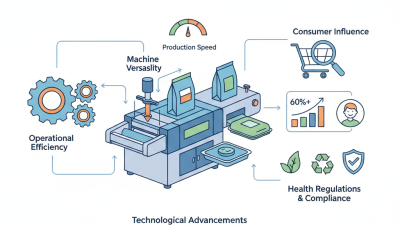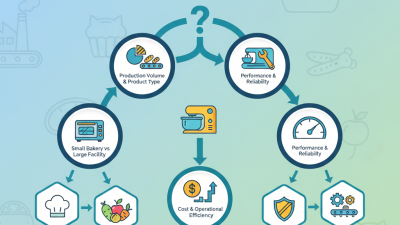



Choosing the right vacuum food packaging solution begins with the product, not the machine.
A chilled beef cut, soft cheese, and prepared salad require different packaging decisions. Product shape, moisture, temperature, shelf-life goals, and distribution distance all influence the final design. A bag that protects cheese may fail around sharp bones or heavy sauces. Small details matter, especially at the seal.
Effective vacuum food packaging removes air, but reliable performance requires more than strong suction. Film thickness, barrier properties, seal width, and machine control must work together. A practical test should examine punctures, leaking seals, wrinkles, and package appearance after storage. The package should still look secure after handling, refrigeration, and transport.
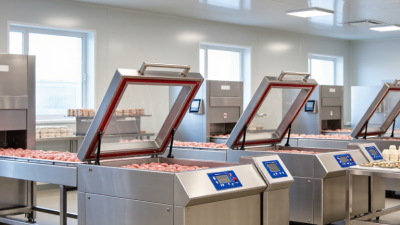
Start with the real production environment. Check daily output, operator skills, available floor space, cleaning routines, and maintenance support. A compact tabletop machine may suit a small kitchen, while a high-throughput line demands automation and consistent cycle control. The cheapest option can become expensive when seals fail or downtime increases.
Ask suppliers for clear specifications, sample trials, and documented food-contact compliance. Request evidence from actual applications, not only polished product photographs. A dependable partner should explain limitations honestly. That builds trust.
There is no universal best solution. Even experienced teams can choose poorly when they ignore product behavior or packaging waste. Reassess the design after testing. The best choice protects food, supports safe handling, controls operating costs, and remains practical for the people using it every day.
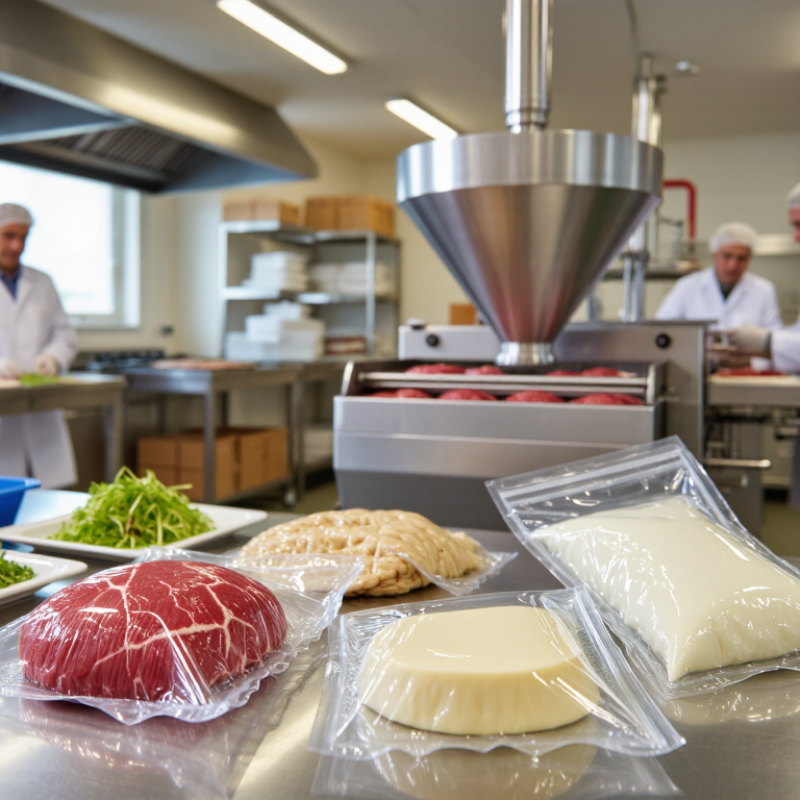
Choosing a vacuum food packaging solution starts with product risk, not seal strength. FDA guidance uses pH 4.6 and water activity, or aw, 0.85 as important safety thresholds. Foods above both values may support Clostridium botulinum growth under oxygen-free conditions. Vacuum packaging can create that environment. It does not automatically make food shelf-stable.
Measure the finished product, not only the recipe. Check pH with a calibrated meter after the product reaches equilibrium. Test aw with a maintained, verified instrument. Sample different locations, especially thick centers and areas with added sauces. A reading below pH 4.6 can reduce botulinal risk, but it does not control every pathogen. An aw below 0.85 also needs careful interpretation. Salt, sugar, acidity, and preservatives may behave differently across the product.
Packaging decisions should match the measured risk. Refrigerated foods may need strong seals, clear use-by dates, and strict cold-chain control. Products above the critical thresholds need validated processing and documented controls, not simply deeper vacuum levels. That is not enough. Select films that resist punctures from bones, sharp edges, or frozen surfaces. Inspect seals after cooling and transport. A single test result can mislead. Recheck pH and aw after formulation changes, storage trials, or equipment adjustments. In practice, the best solution balances microbial safety, package integrity, handling conditions, and honest shelf-life evidence.
Set cold-chain controls at the FDA limit of 5°C (41°F). The FDA Food Code 2022 identifies 5°C or below as the cold-holding limit for time/temperature control foods. This number should guide packaging decisions, not merely decorate a quality manual. A vacuum pouch may reduce oxygen exposure, but it does not replace refrigeration. Choose equipment that creates a consistent seal, limits leakage, and supports rapid cooling after packing.
Measure the food itself. A refrigerator display can show 4°C while the package center remains warmer. Use calibrated probe thermometers and record product temperatures during cooling, storage, and dispatch. The FDA Food Code also treats reduced-oxygen packaging as a process needing documented controls, especially when hazards such as Clostridium botulinum may apply. Keep packages cold, intact, and clearly dated.
Small details matter. Check seal width, film compatibility, and pouch strength against sharp bones or frozen edges. Review temperature logs every day. A single reading is not enough. USDA FSIS guidance on vacuum-packaged foods emphasizes validated controls, sanitation, and refrigerated storage. In practice, operators sometimes trust the machine too much. That is a mistake worth revisiting. The best solution combines reliable sealing with sensors, staff training, corrective actions, and evidence that the product stays at or below 5°C.
How to Choose the Best Vacuum Food Packaging Solution?
Choosing a vacuum film starts with the food, not the machine. Oxygen transmission rate, or OTR, controls how quickly oxygen enters the package. Lower OTR usually supports color, flavor, and oxidation-sensitive quality. Water vapor transmission rate, or WVTR, matters when moisture loss or moisture gain affects texture. For fresh meat, dry snacks, and moist prepared foods, the targets can differ sharply. In packaging trials, I have learned that a low OTR film is not automatically the best choice. A rigid film may protect well but waste material or reduce line efficiency.
ISO 11607 offers a useful framework for seal quality and package integrity. Its principles help teams evaluate seal strength, channel leaks, and process consistency. Seal performance depends on temperature, pressure, dwell time, and contamination near the seal area. Test the finished package, not only the film specification. Store samples under realistic conditions, then inspect them after transport simulation and shelf-life aging. Small wrinkles can become serious leak paths. This is where some specifications need a second look.
Tips: Request OTR and WVTR data at stated temperature and humidity conditions. Confirm whether the values match your storage environment. Run seal-strength and leak tests after vacuuming. Include an intentionally imperfect sample, such as a slightly contaminated seal, to understand process tolerance. Document every setting. ISO 11607 compliance requires evidence, not confident assumptions.
Select films by OTR, WVTR, and ISO 11607 seal requirements
Representative barrier benchmarks at approximately 23°C and 50% relative humidity. Actual values vary with film thickness, humidity, temperature, seal design, and test method. Use the supplier’s certified test data and validate seal strength and package integrity according to ISO 11607.
Vacuum level and throughput should guide the machine choice, not appearance or price alone. A chamber machine removes air from the entire chamber before sealing. It usually reaches about 1–5 mbar absolute pressure. External machines commonly reach roughly 100–300 mbar, depending on bag design and product shape. The difference matters with liquids, sauces, and products containing sharp edges. Chamber systems also support two or more bags per cycle, often producing 120–480 sealed bags per hour. External models usually handle one bag at a time, commonly reaching 60–240 bags per hour. These are practical operating ranges, not guarantees.
Not every product needs maximum vacuum. A deeper vacuum can crush berries, deform bread, or draw liquid into the pump. I have seen small processors lose time correcting those problems. Test the actual product at its coldest normal temperature. Measure residual oxygen, seal strength, cycle time, and rejected bags. A simple stopwatch helps. FAO’s State of Food and Agriculture 2019 estimated that 14% of food is lost between harvest and retail, so packaging efficiency deserves serious attention. However, vacuum packaging does not replace hygiene or temperature control. The FDA Food Code 2022 permits many refrigerated ready-to-eat foods under reduced-oxygen packaging for up to seven days at 5°C, when required controls are followed. That limit is not universal. Validate it with your process, product, and local requirements.
How to Choose the Best Vacuum Food Packaging Solution?
Validate Package Integrity with ASTM D3078 Leak Testing and HACCP Records
Vacuum packaging protects food only when seals remain intact during storage and transport. The CDC estimates that 48 million Americans experience foodborne illness annually. That figure makes small seal defects worth investigating. ASTM D3078 provides a practical bubble-emission method for detecting gross leaks in flexible packages. A technician places the sealed pouch in water, applies controlled vacuum, and watches for continuous bubbles. The seal corner often reveals more than the package center.
Test conditions must match real production risks. Record package type, film structure, vacuum level, test time, water temperature, and observed leak location. A passing result is not enough. ASTM D3078 detects gross leaks, but it may miss tiny channels or slow gas transmission. That limitation matters. We should not confuse one test with complete package validation.
HACCP records connect testing to food safety decisions. Under Codex HACCP principles, monitoring, corrective action, and verification require documented evidence. Link each leak result to the production lot, sealing equipment, operator, and corrective action. Review trends weekly. Three leaks near one seal jaw may indicate misalignment, contamination, or overheating. A clean record can still hide weak sampling. Recheck the sample plan after changes in film, product temperature, or equipment settings. Packaging teams sometimes trust appearance too quickly. Do not. A wrinkled seal may look acceptable until pressure and handling expose its weakness.
| Evaluation Dimension | Recommended Data or Control Point | Example Acceptance Criteria | Verification Method | HACCP Record to Retain |
|---|---|---|---|---|
| Product characteristics | Moisture level, sharp components, bone fragments, oxygen sensitivity, storage temperature, and intended shelf life. | Packaging specification addresses all identified physical, chemical, and microbiological hazards. | Product risk assessment and packaging trial. | Hazard analysis, product description, and packaging approval record. |
| Packaging material barrier | Film structure, thickness, oxygen transmission rate, water-vapor transmission rate, puncture resistance, and seal compatibility. | Material performance meets the validated shelf-life and distribution requirements for the product. | Supplier specification review and laboratory testing where required. | Approved material specification, certificate of analysis, and incoming inspection record. |
| Vacuum level | Target vacuum or residual pressure established for the product and package format. | Vacuum remains within the validated operating range without crushing, leakage, or product deformation. | Calibrated vacuum gauge or in-line sensor check. | Start-up, hourly, and end-of-run vacuum monitoring log. |
| Seal temperature | Validated temperature range for the selected film and sealing equipment. | Seals are continuous, uniform, and free from wrinkles, channels, contamination, or burn-through. | Equipment display check, calibration review, and visual inspection. | Sealer parameter record and calibration record. |
| Seal time and pressure | Dwell time, jaw pressure, cooling time, and seal width defined in the packaging specification. | Parameters remain within validated limits and produce the required seal strength. | Parameter verification and periodic seal-strength testing. | Batch packaging record and corrective-action report for deviations. |
| ASTM D3078 leak testing | Bubble-emission testing for gross leaks in flexible, nonporous packages using a submerged test procedure. | No continuous stream of bubbles or other evidence of a gross leak during the validated test cycle. | Perform ASTM D3078 testing with documented sample conditioning, vacuum level, dwell time, and observations. | ASTM D3078 test form, sample identification, equipment ID, operator, date, and result. |
| Leak-test sampling plan | Sampling frequency based on risk, equipment capability, historical performance, and applicable customer or regulatory requirements. | Sampling plan is approved, consistently followed, and intensified after a failure or process change. | Record review and internal audit. | Sampling schedule, lot traceability, test results, and disposition decision. |
| Visual package inspection | Seal appearance, wrinkles, trapped product, channel leaks, punctures, delamination, and damaged corners. | Zero critical defects; defective packages are segregated and investigated. | Operator inspection under suitable lighting and defined defect standards. | Visual inspection checklist and nonconforming-product record. |
| Seal strength | Minimum seal-strength requirement established for the film, product weight, handling, and distribution conditions. | Measured strength meets the validated specification across the seal width without premature failure. | Laboratory seal-strength test using a calibrated tensile tester. | Seal-strength report, test location, specimen details, and equipment calibration status. |
| Foreign-material control | Control of product residue, dust, sharp edges, broken film, and equipment fragments near the seal area. | Seal area is clean before sealing; contamination does not prevent a complete seal. | Pre-seal inspection and sanitation verification. | Pre-operational inspection, sanitation record, and corrective-action log. |
| Temperature control | Product temperature at packing, cold-storage temperature, transport temperature, and maximum exposure time. | Temperature remains within the validated food-safety limits for the product category. | Calibrated thermometer or data logger checks. | Cooling, storage, dispatch, and temperature-deviation records. |
| Oxygen and atmosphere control | Residual oxygen target where applicable, package headspace, and effect of oxygen exposure on product quality and safety. | Residual oxygen and package atmosphere remain within the validated product specification. | Headspace gas analysis when required by the product risk assessment. | Atmosphere test record, instrument calibration, and lot traceability. |
| Traceability | Production date, lot code, packaging-material lot, machine ID, operator, and finished-product quantity. | Each finished lot can be linked to raw materials, packaging materials, process records, and test results. | Mock recall or traceability exercise. | Batch record, packaging-material receiving record, and distribution log. |
| Corrective action after failure | Immediate product segregation, root-cause investigation, parameter review, reinspection, and documented disposition. | Affected product is controlled until the cause is identified and product safety and integrity are confirmed. | CAPA review and effectiveness verification. | Deviation report, root-cause analysis, disposition record, and preventive-action record. |