




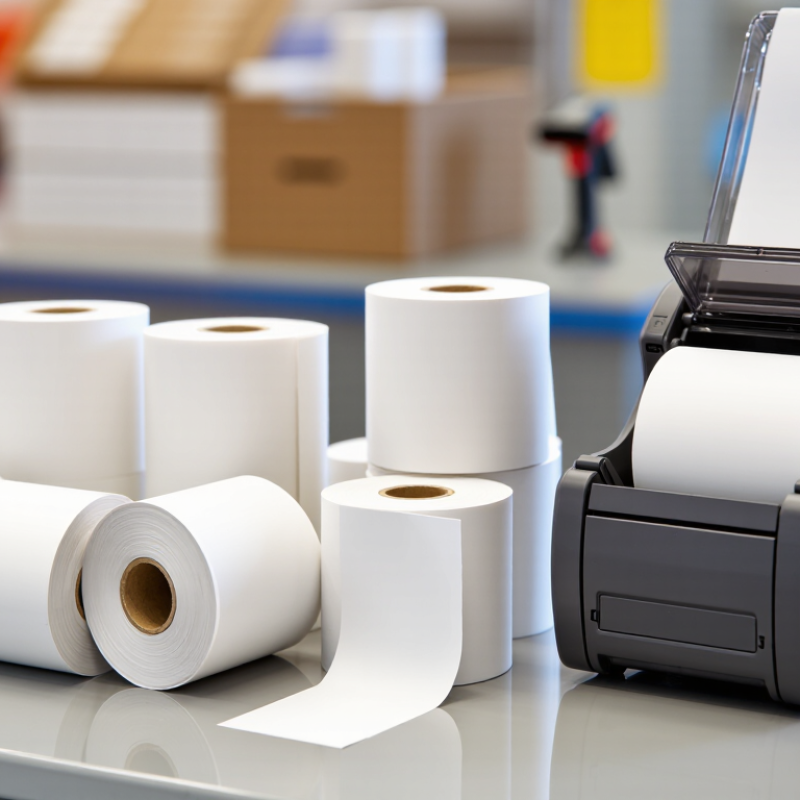
5 Tips for Buying 3 1 8 Inch Thermal Paper?

Buying 3 1 8 Inch Thermal Paper looks simple until receipts fade, jam, or print unevenly. The roll must fit the printer, not merely match the advertised width. A standard 3 1/8-inch roll is approximately 80 millimeters wide, but core size, roll diameter, and paper length still vary. Small differences matter.

Industry research supports careful selection. Smithers’ The Future of Thermal Printing to 2028 identifies continued demand for thermal printing in retail, transport, healthcare, and logistics. Grand View Research also reports steady growth in the thermal paper market, driven by point-of-sale and labeling applications. These reports show a practical reality: digital receipts are growing, but physical transaction records remain important.

Dr. Jane Muncke, managing director of the Food Packaging Forum, has said that thermal paper can be an overlooked source of chemical exposure. That warning deserves attention. Buyers should check whether the paper is BPA-free, BPS-free, or phenol-free. “BPA-free” alone may not tell the whole story. Ask for a compliance statement and coating information.

This guide, 5 Tips for Buying 3 1 8 Inch Thermal Paper, focuses on five purchasing decisions. They include printer compatibility, paper thickness, image durability, chemical composition, and supplier reliability. Test one roll before ordering a case. Store it away from sunlight, heat, plasticizers, and damp shelves. A receipt that looks sharp at checkout may fade inside a hot delivery van. Price matters, but wasted rolls cost more. The perfect choice is rarely the cheapest one. Sometimes, buyers overlook the core.

5 Tips for Buying 3 1 8 Inch Thermal Paper?

Determine the Correct 3 1/8-Inch Thermal Paper Size and Core

Buying 3 1/8-inch thermal paper requires more than checking the paper width. The correct size is usually 3.125 inches wide, but small differences can affect feeding. Measure an old roll with a ruler, including its width and outer diameter. Do not rely only on a product title.

The core matters just as much. It is the cardboard tube inside the roll. Measure its inner diameter, then compare it with the printer’s spindle or holder. Common core sizes vary, so a roll may fit loosely, fail to turn, or become stuck. Check the printer manual when available. If the manual is unclear, remove the existing roll and photograph its side profile before ordering.

I once focused on width and ignored roll diameter. The paper fit the slot but touched the printer cover. That small mistake caused uneven feeding. Measure the maximum roll diameter allowed by the compartment, especially for high-capacity rolls. Also check whether the paper is wound for the printing side to face outward. Test one roll before buying a case. A short test can reveal poor feeding, faint printing, or an incorrect core. Specifications are helpful, but real equipment can be less forgiving.

Check Printer Compatibility and Thermal Coating Requirements

5 Tips for Buying 3 1/8 Inch Thermal Paper?

A 3 1/8 inch roll usually measures 80 mm wide, but small differences can cause feeding errors. Check the printer manual before ordering. Confirm the supported width, core diameter, maximum roll diameter, and winding direction. Some printers accept 80 mm rolls but provide only 72 mm of printable space. That detail matters.

The coating must match the printer’s direct-thermal system. Thermal paper reacts to heat, so the coated side should face the printhead. Test it by scratching the surface with a fingernail. The darker line usually identifies the active side. Ask for the paper’s activation temperature, image density, and resistance data. A lower activation temperature may print clearly, but it can also create unwanted marks in hot storage areas. Not every “premium” grade performs better.

Grand View Research valued the global thermal paper market at approximately US$4.3 billion in 2023, with continued growth forecast through 2030. This expansion makes technical claims easier to find, but not always easier to verify. Request a specification sheet and a sample roll. Print fine text, barcodes, and gray graphics. Then test receipts after exposure to light, moisture, and gentle rubbing. I once trusted a roll based on its bright appearance. The print faded sooner than expected. Compatibility is measurable; packaging is not.

Compare Paper Quality, Thickness, Brightness, and Print Durability

5 Tips for Buying 3 1/8 Inch Thermal Paper

A 3 1/8-inch roll usually measures 80 mm wide, but width alone does not ensure reliable printing. Check the paper specification sheet for grammage and caliper. ISO 534 defines methods for measuring paper thickness and grammage. In practice, many receipt rolls use approximately 48–80 gsm stock. Heavier paper feels stronger, yet it may reduce the number of receipts per roll. Handle both samples. That small test often reveals more than packaging claims.

Brightness affects contrast, but extreme whiteness is not automatically better. ISO 2470-1 measures paper brightness through blue-light reflectance. Ask for the tested brightness value and compare samples under the same lighting. A dull gray background can make small characters difficult to scan. A glossy surface may look impressive, but fingerprints and glare can reduce readability. I once judged paper by appearance alone. That was not a smart test.

Print durability needs practical evidence. The ISO 11798 permanence framework evaluates printed information after controlled aging, although thermal receipts face different heat and light conditions. Store a printed sample near a window, inside a warm vehicle, and in a wallet for several weeks. Compare faded text, gray smearing, and barcode clarity. Test ten consecutive rolls, not one lucky roll. Ask whether the coating prints evenly at your machine’s normal speed and temperature. Data sheets help, but real operating conditions still expose weaknesses.

Evaluate Roll Quantity, Packaging, Shelf Life, and Storage Conditions

5 Tips for Buying 3 1/8 Inch Thermal Paper?

Tip 1: Match roll quantity with actual usage. Review four weeks of receipts, then add a 10–15% buffer. Buying a full pallet can be wasteful when demand changes. I once overestimated seasonal traffic. That was expensive.

Tip 2: Inspect the packaging carefully. Choose sealed cartons with moisture-resistant inner wrapping. Edges should remain firm, not crushed or telescoped. The European Thermal Paper Association recommends protecting rolls from heat, sunlight, moisture, and chemical contact. Packaging is part of product quality.

Tip 3: Check the manufacturing date and stated shelf life. ETPA storage guidance indicates many thermal grades retain reliable image performance for about three to five years under suitable conditions. However, shelf life varies by coating and printer exposure. Request a sample roll before committing to a large order.

Tip 4: Control storage conditions. Keep rolls near 18–25°C, with relative humidity around 40–60%. Avoid windows, radiators, vehicle trunks, and damp stockrooms. Tip 5: Rotate cartons using first-in, first-out handling. Smithers’ 2024 thermal-paper market review identifies retail and logistics as major demand sectors, where storage turnover can be rapid. Still, “fast-moving” should not replace inspection. Check fading, curling, and gray background before use.

5 Tips for Buying 3 1/8-Inch Thermal Paper

Compare roll length and carton quantity, then confirm packaging quality, shelf life, and storage requirements before ordering. The chart shows representative, commonly available configurations for 3 1/8-inch receipt rolls; exact specifications may vary by supplier.

Buying reference: The standard roll width is 3.125 inches (79.4 mm). Common roll lengths range from approximately 150 to 300 feet, while cartons often contain about 20 to 50 rolls. For better print performance, keep thermal paper in its original packaging, away from heat, sunlight, moisture, oils, and plasticizers. A typical unopened shelf-life target is about two years when stored near or below 25°C (77°F) and at moderate relative humidity.

Review Supplier Reliability, Pricing, Certifications, and Return Policies

5 Tips for Buying 3 1/8 Inch Thermal Paper

Supplier reliability matters more than a low quoted price. Grand View Research estimated the global thermal paper market at about USD 4.3 billion in 2023, showing strong demand and intense price competition. Ask suppliers for recent production records, shipping timelines, and a physical sample. Measure the roll width, core size, winding direction, and total length. A roll labeled 3 1/8 inches should measure close to 80 millimeters. Small differences can cause printer jams. Test several rolls, not just one.

Pricing should include freight, packaging, defective-roll replacement, and storage costs. The cheapest quotation may hide shorter roll lengths or inconsistent coating. Request a written specification sheet. Confirm image density, fading resistance, and performance under heat and humidity. Smithers’ thermal printing industry research highlights durability and application reliability as continuing market concerns. That matches practical experience. Paper can look fine during delivery, then fade beside a warm checkout counter.

Certifications need careful checking. Request current test reports for chemical compliance, recycled content, or responsible forestry claims. The European Chemicals Agency restricts BPA in thermal paper at concentrations of 0.02% or higher, so dated documents deserve caution. Also review the return policy before ordering large quantities. It should define acceptable defects, evidence requirements, inspection periods, and replacement shipping. A 30-day policy sounds useful, but vague wording creates risk. I would keep one unopened carton for comparison. That step is easy to miss. Reliable suppliers should answer technical questions clearly, without avoiding uncomfortable details.

5 Tips for Buying 3 1/8 Inch Thermal Paper? - Review Supplier Reliability, Pricing, Certifications, and Return Policies

Tip Evaluation Dimension Recommended Buying Benchmark What to Verify Risk Signal
1 Confirm roll compatibility Specify a paper width of 3 1/8 inches, equal to approximately 79.4 mm. Confirm the roll length, core size, outer diameter, and paper side coating before ordering. Request a technical datasheet and a physical sample. Check whether the core and maximum roll diameter fit the intended receipt printer. Unclear dimensions, missing core information, or rolls that jam during feeding.
2 Review supplier reliability Prefer suppliers that provide a documented lead time, lot traceability, pre-shipment inspection, and a clear process for handling defective rolls. Ask for production capacity, standard lead time, quality-control records, packaging details, and at least two recent order references without relying only on online reviews. Repeated delivery delays, inconsistent paper shade or print density, and no traceable batch information.
3 Compare total pricing Compare the cost per roll rather than only the case price. For a screening comparison, calculate: total delivered cost ÷ usable rolls received. Include paper grade, roll length, quantity per case, shipping, duties, payment fees, sample charges, and expected waste in the quotation. An unusually low unit price caused by shorter rolls, thinner paper, high freight charges, or undisclosed fees.
4 Check certifications and chemical claims For sensitive-use applications, request current documentation for BPA-free or phenol-free claims. Where required, review relevant REACH, RoHS, forestry, or quality-management documentation. Confirm the certificate holder, product scope, issue date, testing laboratory, and whether the document applies to the exact thermal paper grade being purchased. “Eco-friendly” or “non-toxic” wording without a test report, declaration, or identifiable certification scope.
5 Read the return and warranty policy Choose a policy that defines the reporting period, evidence required, replacement or refund options, and responsibility for return shipping when the defect is confirmed. Check treatment of defective, damaged, incorrect, and unused rolls. Confirm whether customized packaging or opened cases are excluded. Final-sale terms, very short claim windows, no replacement commitment, or unclear proof requirements.
Practical purchase rule: Test sample rolls in the actual printer before placing a bulk order. Evaluate feeding, print contrast, roll length, winding quality, storage condition, and image readability after exposure to heat, light, and moisture.